Recommended Books:
 Aha! Gotcha : Paradoxes to Puzzle and Delight
is highly recommended to anyone who has enjoyed the paradoxical side of curiouser.co.uk. It is just one of
many fascinating books written by Martin Gardner.
Aha! Gotcha : Paradoxes to Puzzle and Delight
is highly recommended to anyone who has enjoyed the paradoxical side of curiouser.co.uk. It is just one of
many fascinating books written by Martin Gardner.The book is divided into six sections: Logic, Number, Geometry, Probability, Statistics and Time. Each sections features a number of challenging but clearly explained paradoxes. Gardner is an excellent writer, who has the rare gift of being able to explain potentially confusing subject matter in a clear and straightforward way.
If you are looking for a book with colourful illustrations and dazzling artwork, this should not be your choice, but if you are interested to read more about paradoxes, this will serve as an excellent introduction, with plenty of referrences for further reading.
 The Mind's I
Mind expanding essays by Douglas Hofstadter and Daniel Dennett. Stimulating reading that will open your mind.
The Mind's I
Mind expanding essays by Douglas Hofstadter and Daniel Dennett. Stimulating reading that will open your mind.
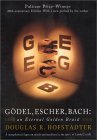 Godel, Escher, Bach by D. Hofstadter
Linking together the music of Bach, the graphic art of Escher and the mathematical theorems of Godel, as well as ideas drawn from logic, biology, psyhcology, physics and linguistics, Hofstadter illumnintaes one of the greatest mysteries of modern science: the nature of the human thought process. (Amazon.co.uk synopsis)
Godel, Escher, Bach by D. Hofstadter
Linking together the music of Bach, the graphic art of Escher and the mathematical theorems of Godel, as well as ideas drawn from logic, biology, psyhcology, physics and linguistics, Hofstadter illumnintaes one of the greatest mysteries of modern science: the nature of the human thought process. (Amazon.co.uk synopsis) One Two Three...Infinity : Facts and Speculations of Science
is a highly accessible read on the more entertaining aspects of mathematics and science.
One Two Three...Infinity : Facts and Speculations of Science
is a highly accessible read on the more entertaining aspects of mathematics and science.
The book is divided into four sections: 1) Playing with Numbers 2) Space, Time and Einstein 3) Microcosmos 4) Macrocosmos.
As Gamow writes in the preface to the updated 1961 edition (it was first published in 1947), "all books on science are apt to become out of date a few years after publication." However, despite the myriad advances that have been made since this book was last updated, it is still far from anachronistic, and it is even considered by many to be something of a classic.
For some it will read as an interesting first introduction to some of the peculiarities of science and mathematics, while for others it may serve as an interesting archive of scientific thought. The chapter on Einstein and Relativity is particularly good as an introduction the the wonders of Einstein's remarkable theory.
Finally, readers may find that the section describing the "macrocosmos" serves as interesting prelude to the more up to date The Five Ages of the Universe (See below.)
 The Five Ages of the Universe
by Fred Adams and Greg Laughlin.
Two brilliant young physicists, Fred Adams and Greg Laughlin,
captured the attention of the world when they announced they had identified the
five ages of time. But is it possible for us to know the complete
life story of the universe from beginning to end?
The astonishing truth is that recent study has defined the essential
mechanisms of astrophysics so well that science can now determine the five
ages the universe will go through over its ten thousand trillion trillion trillion trillion trillion trillion trillion trillion - year existence. We now know how the cosmos was born, how it grew up, how it will shuffle into its old age, and how it will celebrate its googolth (10"superscript 100") birthday. With The Five Ages of the Universe, the mythologies of eternity and apocalypse can now be matched against scientific fact. Adams and Laughlin study the far future of a universe that, according to current astronomical observations, will expand forever. They show what will actually happen if a black hole enters our solar system, how life might exist beyond the atmosphere of a white dwarf, even how new universes could be produced and how we would travel to them. (Card catalog description.)
The Five Ages of the Universe
by Fred Adams and Greg Laughlin.
Two brilliant young physicists, Fred Adams and Greg Laughlin,
captured the attention of the world when they announced they had identified the
five ages of time. But is it possible for us to know the complete
life story of the universe from beginning to end?
The astonishing truth is that recent study has defined the essential
mechanisms of astrophysics so well that science can now determine the five
ages the universe will go through over its ten thousand trillion trillion trillion trillion trillion trillion trillion trillion - year existence. We now know how the cosmos was born, how it grew up, how it will shuffle into its old age, and how it will celebrate its googolth (10"superscript 100") birthday. With The Five Ages of the Universe, the mythologies of eternity and apocalypse can now be matched against scientific fact. Adams and Laughlin study the far future of a universe that, according to current astronomical observations, will expand forever. They show what will actually happen if a black hole enters our solar system, how life might exist beyond the atmosphere of a white dwarf, even how new universes could be produced and how we would travel to them. (Card catalog description.)
 Can You Believe Your Eyes : Over 250 Illusions and Other Visual Oddities
Presents over 250 visual illusions gathered from around the world to explore the psychology of vision. Discusses the phenomenon of human perception and the use of illusions in society.
Can You Believe Your Eyes : Over 250 Illusions and Other Visual Oddities
Presents over 250 visual illusions gathered from around the world to explore the psychology of vision. Discusses the phenomenon of human perception and the use of illusions in society.
 Puzzlegrams : A Colorful, Challenging Collection of 178 Classic Puzzles
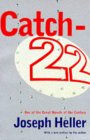 Catch 22 by Joseph Heller.
At the heart of Joseph Heller's bestselling novel, first published in 1961, is a satirical indictment of military madness and stupidity, and the desire of the ordinary man to survive it. It is the tale of the dangerously sane Captain Yossarian, who spends his time in Italy plotting to survive. (Amazon synopsis.)
"There was only one catch and that was Catch 22, which specified that a concern for one's own safety in the face of dangers that were real and immediate was the process of a rational mind . . . Orr would be crazy to fly more missions and sane if he didn't, but if he was sane he had to fly them. If he flew them he was crazy and didn't have to; but if he didn't want to he was sane and had to."
 There Are Two Errors In The The Title Of This Book: A Sourcebook of Philosophical Puzzles, Problems, and Paradoxes
by Robert M. Martin.
There Are Two Errors In The The Title Of This Book: A Sourcebook of Philosophical Puzzles, Problems, and Paradoxes
by Robert M. Martin.
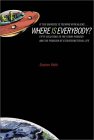 Where is Everybody? If the Universe Is Teemin with Aliens - Where Is Everybody?: Fifty Solutions to Fermi's Paradox and the Problem of Extraterrestrial Life

